




How To Visit Tikal Mayan Ruins: Complete Guatemala Guide
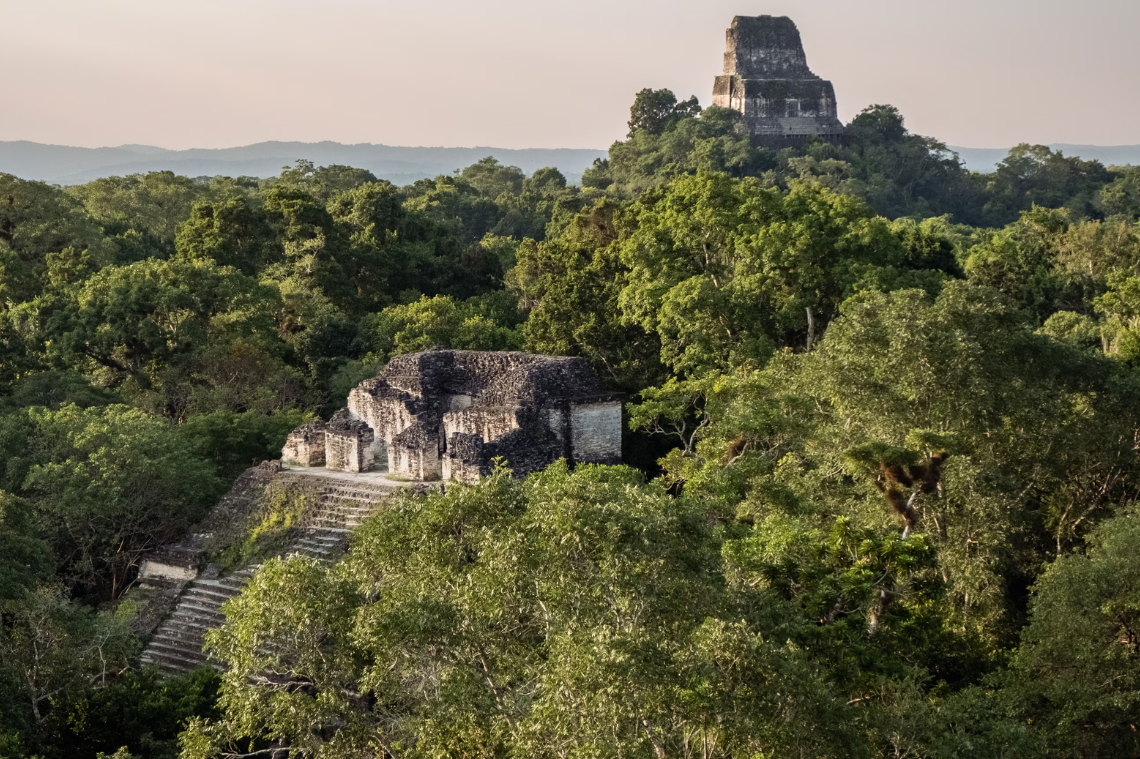
Hidden inside the tropical forests of northern Guatemala, Tikal is one of the most impressive ancient Maya cities in Central America. Monumental pyramids rise above the jungle canopy, broad ceremonial plazas sit between royal palaces, and forest trails connect structures that once formed the heart of a powerful Maya kingdom.
Visiting Tikal is very different from visiting an archaeological site surrounded by a modern city. The ruins lie inside a huge protected national park in Guatemala’s Petén region, where monkeys, toucans and other wildlife live among the ancient temples.
This complete guide explains how to visit Tikal Mayan ruins, including how to get there from Flores, Guatemala City and Belize, ticket prices, opening hours, sunrise and sunset visits, where to stay, what to see, how long you need, the best walking route, museums, wildlife, weather, packing tips and other Maya sites that can be combined with Tikal.


Tikal At A Glance
| Detail | Information |
|---|---|
| Location | Petén, northern Guatemala |
| Main base | Flores |
| Distance from Flores | About 63 km by the official park route |
| Normal hours | 6:00 AM–6:00 PM |
| Foreign admission | Q150 |
| Sunrise or sunset category | Q100 foreign visitor |
| Camping | Q50 foreign visitor |
| Uaxactún admission | Q50 foreign visitor |
| UNESCO status | World Heritage Site since 1979 |
| Suggested visit | 4–6 hours minimum |
Where Is Tikal?
Tikal National Park is in Guatemala’s northern Petén region, deep within the Maya Forest.
The nearest main tourist town is Flores, an attractive island town in Lake Petén Itzá that has become the main travel base for Tikal and other archaeological sites in northern Guatemala.
Tikal is approximately 63 km from Flores using the official approach route.
From Flores, the route follows the CA-13 toward Melchor de Mencos before branching toward El Remate and continuing north to Tikal.
The park is surrounded by forest rather than a major modern city, which is one of the reasons visiting Tikal feels dramatically different from many other famous archaeological sites.
Map Of Tikal Guatemala
Tikal itself is enormous, so understanding the site’s layout before arriving is useful.
The main archaeological zone is connected by ancient causeways and modern walking paths.
Important areas include:
- Great Plaza
- Temple I
- Temple II
- North Acropolis
- Central Acropolis
- Temple III
- Temple IV
- Mundo Perdido
- Temple V
- Plaza of the Seven Temples
- Group G
- Temple VI
Why Is Tikal Important?
Tikal was one of the most powerful political, economic and military centers of the ancient Maya world.
UNESCO describes the site as one of the most important archaeological complexes left by the Maya civilization.
Human occupation in the region stretches back into the Preclassic period, while Tikal reached its greatest power during the Classic Maya era.
The city contained temples, palaces, ceremonial plazas, residential compounds, ball courts, causeways and water-management systems spread across an enormous landscape.
Its rulers maintained relationships — sometimes cooperative and sometimes hostile — with cities throughout the Maya world and beyond.
UNESCO notes connections with places as distant as:
- Calakmul in Mexico;
- Teotihuacan in central Mexico;
- Copán in Honduras;
- Caracol in modern Belize.
Tikal declined toward the end of the Classic Maya period and its major urban center was eventually abandoned.
The forest later reclaimed much of the ancient city.
Tikal Is Both A Cultural & Natural World Heritage Site
Tikal is unusual because UNESCO recognizes it for both archaeological importance and biodiversity.
The national park covers roughly 57,600 hectares and protects tropical forest, wetlands and savannah as well as ancient Maya remains.
UNESCO records more than 300 species of birds and numerous mammals in the wider park environment.
That combination creates one of the most memorable aspects of Tikal: you are not simply walking between ruins.
You are hiking through a living tropical forest that grew over and around an ancient metropolis.
How To Get To Tikal From Flores
Flores is the easiest starting point for most travelers.
You have four main choices:
1. Shared Shuttle
Shared tourist shuttles leave Flores and Santa Elena for Tikal.
This is generally one of the easiest options if you do not want to rent a vehicle.
Some shuttles are transport-only while others are sold as a package with a guide.
Before paying, confirm:
- pickup location;
- departure time;
- return time;
- whether park admission is included;
- whether a guide is included;
- how many hours you will actually have inside Tikal.
2. Organized Tour
A guided day tour is the easiest choice if you want transportation and historical explanation in one booking.
Tikal contains hundreds of structures and a long dynastic history, so a knowledgeable guide can make the ruins much easier to understand.
3. Private Driver
A private transfer offers more control over your schedule.
This is useful if you want to:
- arrive early;
- avoid waiting for a large group;
- stay longer than a standard tour;
- travel with children;
- carry photography equipment.
4. Rental Car
Tikal can be reached by paved road from Flores.
The official CONAP travel guide directs drivers from Flores along CA-13 toward Melchor de Mencos, then toward El Remate and onward to the park.
A rental car works particularly well if your wider Petén itinerary includes Tikal, Yaxhá, El Remate or other destinations.
How Long Does Flores To Tikal Take?
The official protected-area guide estimates roughly one hour from Flores.
In practice, allow extra time for:
- hotel pickups;
- ticket checks;
- traffic around Flores or Santa Elena;
- stops by a shared shuttle;
- the drive through the protected area;
- wildlife crossing the road.
For a regular morning visit, many travelers leave Flores early enough to reach Tikal near opening time.
El Remate To Tikal
El Remate is another useful base.
It sits on the eastern edge of Lake Petén Itzá and is closer to Tikal than Flores.
El Remate is a good choice if you prefer:
- a quieter atmosphere;
- less city traffic;
- a shorter morning drive;
- lakefront accommodation;
- easy access toward Tikal and the Belize road.
Flores has more restaurants, tour agencies and nightlife, while El Remate generally feels calmer.
How To Get To Tikal From Mundo Maya Airport
Mundo Maya International Airport serves the Flores and Santa Elena area.
If you fly into Petén, you can continue to Tikal by:
- pre-booked transfer;
- tour van;
- taxi;
- rental car.
You do not need to cross onto Flores Island first if your plan is to travel directly toward Tikal.
However, spending at least one night in Flores is often more comfortable than trying to combine a flight and a rushed archaeological visit on the same day.
How To Get To Tikal From Guatemala City
Tikal is hundreds of kilometers north of Guatemala City.
The practical options are:
Fly To Flores
Flying to the Mundo Maya/Flores area is the fastest option.
From the airport, continue by road to Tikal or spend the night in Flores.
Long-Distance Bus
Overland buses connect Guatemala City with the Petén region.
This takes much longer than flying but may suit backpackers or travelers on a tighter budget.
Once in Flores or Santa Elena, arrange the final Tikal transport separately.
How To Visit Tikal From Belize
Tikal is a popular side trip for travelers visiting Belize because western Belize lies relatively close to Guatemala’s Petén region.
A common overland route passes through the border near Melchor de Mencos.
Travelers coming from places such as San Ignacio can cross into Guatemala and continue toward Tikal or Flores.
For a same-day international trip, an organized tour is often easier because border procedures, transport changes and park timing all need to work together.
If you have more time, spending a night in Flores or El Remate gives you a much less rushed experience.
Tikal Opening Hours
Current official 2026 information lists normal Tikal National Park opening hours as:
6:00 AM to 6:00 PM daily.
The park also operates extraordinary access windows for special experiences:
- Sunrise: 4:00 AM–6:00 AM
- Sunset: 6:00 PM–8:00 PM
Because these special visits operate outside standard opening hours, arrange the correct ticket and any required tour/guide arrangements in advance.
Tikal Entrance Fee
Guatemala’s Ministry of Culture and Sports published the following current 2026 prices:
| Ticket | Guatemalan | Foreign Visitor |
|---|---|---|
| Regular Tikal admission | Q25 | Q150 |
| Sunrise or sunset category | Q20 | Q100 |
| Camping | Q10 | Q50 |
| Uaxactún | Q5 | Q50 |
How To Buy Tikal Tickets
The Ministry of Culture and Sports says Tikal tickets can be purchased through its official online ticket platform or at the ticket office when arriving at the park.
Buying online is particularly useful if you are planning:
- a sunrise visit;
- a very early departure from Flores;
- a tight itinerary;
- a visit during a busy holiday period.
Save your ticket confirmation offline because mobile data can be unreliable inside remote forest areas.
Carry the same travel identification used when purchasing the ticket.
Tikal Sunrise Tour
Watching the forest wake up around Tikal is one of the park’s best-known special experiences.
The official sunrise access window runs from 4:00 AM to 6:00 AM.
This means a Flores-based sunrise trip requires a very early departure.
Many travelers therefore choose one of three strategies:
- leave Flores in the middle of the night;
- stay in El Remate to shorten the transfer;
- stay near or inside the Tikal visitor area the previous night.
Temple IV is strongly associated with the classic jungle-canopy view.

Tikal Sunset Tour
The official sunset period runs from 6:00 PM to 8:00 PM.
This can be attractive because most regular daytime visitors are leaving as the forest becomes quieter.
It can also be more comfortable than walking through the park during the hottest part of the afternoon.
Carry a headlamp or reliable flashlight because you may be walking forest paths after dark.
As with sunrise, check the official ticket and guide requirements when booking.
Do You Need A Guide At Tikal?
You can explore Tikal independently during normal daytime visiting hours.
A guide is still worth considering because Tikal is not simply a collection of photogenic pyramids.
A knowledgeable guide can explain:
- Maya dynasties;
- hieroglyphic inscriptions;
- royal burials;
- political rivalry with Calakmul;
- connections with Teotihuacan;
- the role of ceremonial plazas;
- Maya architecture;
- wildlife and forest ecology.
If this is your only major Maya site in Guatemala, spending at least part of the day with a knowledgeable guide can add a great deal of context.
Best Things To See At Tikal
1. Great Plaza
The Great Plaza is the ceremonial heart of Tikal and the place most people imagine when they think of the ruins.
Temple I and Temple II face each other across the plaza, while the North Acropolis and Central Acropolis frame the other sides.
This is one place where it is worth slowing down instead of taking a photograph and immediately walking away.
2. Temple I — Temple Of The Great Jaguar
Temple I dominates the eastern side of the Great Plaza.
It was built during the Late Classic period and is associated with ruler Jasaw Chan K’awiil I.
The steep pyramid and huge roof comb create one of the most recognizable silhouettes in Maya architecture.

3. Temple II
Temple II faces Temple I from the western side of the Great Plaza.
Its elevated viewpoint gives visitors one of the best perspectives across the plaza toward Temple I.
Use only authorized visitor stairways and obey current climbing restrictions rather than attempting to use original ancient staircases.
4. North Acropolis
The North Acropolis is one of Tikal’s most archaeologically complex areas.
Successive generations constructed temples over earlier buildings, creating layers of architecture associated with royal ceremonies and burials.
5. Central Acropolis
The Central Acropolis contains a maze-like collection of courtyards, rooms and palace structures.
Walking through it gives a very different impression from standing in front of the huge pyramids because the architecture feels more human in scale.
6. Temple IV
Temple IV is one of Tikal’s tallest and most famous structures.
The upper viewpoint looks across an enormous green canopy with several temple roof combs rising above the forest.
The official Ministry continues to identify Temple IV as one of the park’s principal attractions.
This is also the landscape that made Tikal famous with generations of film fans after the jungle view appeared in the original Star Wars.

7. Mundo Perdido
Mundo Perdido, or the Lost World, is one of Tikal’s oldest major ceremonial complexes.
The area feels somewhat separate from the monumental Late Classic center and helps visitors understand that Tikal developed over many centuries rather than appearing all at once.
The large Lost World pyramid is one of the main landmarks.
8. Temple V
Temple V is another enormous pyramid south of the main central area.
The structure rises approximately 57 meters and is one of the tallest monuments at Tikal.
Its steep façade gives it a particularly imposing appearance from the plaza below.

9. Plaza Of The Seven Temples
This broad ceremonial plaza contains a row of small temples along one side as well as ball-court structures and other buildings.
It is generally quieter than the Great Plaza and gives a better sense of Tikal’s enormous scale.
10. Temple VI
Temple VI is sometimes called the Temple of the Inscriptions because of its unusually long hieroglyphic text.
It lies farther from the central tourist zone, making it a useful addition for travelers spending a full day at the site.
Suggested Tikal Walking Route
If you have about 5–6 hours, a practical first visit might follow this order:
- Visitor Center
- Great Plaza
- Temple I & Temple II
- North Acropolis
- Central Acropolis
- Temple III area
- Temple IV
- Mundo Perdido
- Plaza of the Seven Temples
- Temple V
This route gives you a mixture of the famous monuments, jungle viewpoints and quieter archaeological areas.
If you only have three hours, focus on the Great Plaza, Acropolises, Temple IV and one additional complex.
How Much Walking Is There?
A lot.
Tikal is not a compact museum where every attraction sits beside the entrance.
The archaeological core covers a large forested area and some of the major temples are separated by long causeways and jungle paths.
A proper visit can easily involve several kilometers of walking.
Paths are mostly manageable, but you may encounter:
- uneven ground;
- tree roots;
- mud after rain;
- hills;
- long stairways;
- high humidity.
Can You Climb The Tikal Pyramids?
Visitors are not allowed to climb every ancient structure.
This is both a conservation and safety issue.
Where access is allowed, modern visitor stairs or designated routes are often provided rather than the original steep ancient staircases.
Never climb:
- closed structures;
- temple roof combs;
- areas behind barriers;
- fragile walls or unrestored architecture.
The official protected-area guidance specifically warns visitors not to climb building roof combs or damage archaeological walls.
Tikal Museums
The visitor area contains two museums that can add useful context to the ruins.
Museo Sylvanus G. Morley
The Ministry says this museum contains around 250 objects including ceramics, jade, flint, obsidian, stelae and carved altars.
It also includes a reproduction related to Burial 116, the royal tomb discovered beneath Temple I.
Current official hours are:
8:00 AM–4:00 PM daily.
The current foreign admission is Q30.
Museo De Lítica
The Lithic Museum displays carved stone monuments including stelae and other objects that help explain Tikal’s rulers and historical inscriptions.
It is also open from 8:00 AM–4:00 PM, with current foreign admission listed at Q30.
Wildlife At Tikal
Tikal is as much a forest experience as an archaeological one.
Possible wildlife sightings include:
- howler monkeys;
- spider monkeys;
- coatis;
- ocellated turkeys;
- toucans;
- parrots;
- woodpeckers;
- deer;
- many tropical bird species.
UNESCO notes that the wider protected landscape supports jaguars and pumas as well, although ordinary visitors should not expect to see these elusive cats.
Early morning generally provides the best combination of cooler weather, bird activity and monkey calls.


Best Time Of Day To Visit Tikal
Early morning is the best choice for most travelers.
Advantages include:
- cooler temperatures;
- better wildlife activity;
- less intense humidity;
- fewer visitors during the first part of the morning;
- more time to explore before closing.
The middle of the day can become very hot and humid.
Use the hotter hours for shaded paths, lunch or one of the museums.
Best Time Of Year To Visit
Tikal is open throughout the year.
Petén has a tropical climate rather than four sharply defined seasons.
The drier part of the year generally offers easier trail conditions, while the wetter months bring greener jungle scenery, higher humidity and more frequent showers.
CONAP recommends carrying rain protection during the rainy season.
Even in a drier month, tropical rain is still possible.
What To Bring To Tikal
The official protected-area guidance recommends light clothing, sufficient water, insect repellent, rain protection in the wet season and appropriate walking shoes.
A practical packing list is:
- Comfortable walking shoes — you will cover significant distance.
- Water — Petén can be extremely hot and humid.
- Insect repellent — Tikal is surrounded by tropical forest.
- Sun hat
- Sunscreen
- Light rain jacket or poncho
- Offline park map
- Charged phone or camera
- Power bank
- Cash for small expenses
- Headlamp if taking sunrise or sunset access
Food & Water
Do not begin a long Tikal visit without water.
The visitor-service area has places where travelers can obtain food and drinks, but the monumental archaeological zone itself is spread out.
Plan your meal timing rather than expecting restaurants beside every major pyramid.
Keep all food waste contained and follow park rules designed to protect wildlife.
Never feed monkeys, coatis or birds.
Where To Stay For Tikal
Flores
Flores is the best overall base for most visitors.
Advantages:
- largest accommodation choice;
- restaurants and cafés;
- tour agencies;
- airport access;
- lakefront setting;
- easy shuttle bookings.
El Remate
Choose El Remate if you prefer a quieter location and a shorter drive to Tikal.
It works especially well for travelers continuing toward Belize or exploring eastern Petén.
Near Tikal
Staying near the park can make sunrise access much easier because you avoid an extremely early drive from Flores.
Accommodation choices are more limited and nightlife is minimal, but you gain quick access to the archaeological area and forest environment.
Can You Camp At Tikal?
Yes.
The Guatemala Ministry of Culture’s current 2026 tariff lists camping at:
- Q10 for Guatemalans
- Q50 for foreign visitors
Camping can make sense for travelers planning very early or late access.
Confirm the current camping location, ticket requirements and facilities before arriving.
How Long Do You Need At Tikal?
3 Hours
Possible, but rushed.
Focus on the Great Plaza, Temple IV and one or two additional complexes.
4–6 Hours
This is the best amount of time for most first-time visitors.
You can see the major monuments while still having time for jungle walks and photographs.
Full Day
Best for archaeology enthusiasts, photographers and wildlife lovers.
A full day lets you explore farther from the Great Plaza, visit museums and spend time in quieter sections of the site.
Two Days
Consider two days if you want sunrise or sunset plus a slow archaeological visit.
This prevents your entire experience from turning into a race between monuments.
Suggested One-Day Tikal Itinerary
Early morning: Travel from Flores or El Remate.
6:00–7:00 AM: Enter the park and enjoy the cooler forest.
Morning: Great Plaza, Temple I, Temple II, North Acropolis and Central Acropolis.
Late morning: Walk toward Temple IV.
Midday: Mundo Perdido and shaded jungle paths.
Early afternoon: Temple V and Plaza of the Seven Temples.
Later afternoon: Museum or visitor area before returning to Flores.
Alternative: Add a pre-booked sunset experience if you want to remain after normal park hours.
Tikal Or Yaxhá?
Tikal and Yaxhá are both major Maya archaeological destinations in Petén, but the experiences are different.
Tikal is larger, more famous and contains some of the most monumental Maya architecture in Guatemala.
Yaxhá receives fewer visitors and has a beautiful setting between lakes and forest.
If you have enough time, do not choose between them.
Visit Tikal first, then use Yaxhá as a quieter second archaeological day.
Tikal & Uaxactún
Uaxactún lies north of Tikal and can be reached by continuing through the protected area.
The official CONAP guide says the route continues approximately 23 km on an unpaved road from the Tikal area.
Uaxactún is important archaeologically and is also home to a living forest community.
The current foreign visitor admission listed by the Ministry is Q50.
Combining the two makes more sense for travelers with extra time than for someone trying to see Tikal in a rushed half day.
Is Tikal Safe To Visit?
Tikal is a major protected visitor destination, but it is also a large tropical forest environment.
Normal travel precautions still matter.
Stay on official visitor trails, obey staff instructions and do not enter closed structures or remote forest tracks casually.
Additional practical concerns include:
- heat exhaustion;
- dehydration;
- slippery stairs after rain;
- mosquitoes;
- getting disoriented on forest paths;
- approaching wildlife too closely.
Keep your ticket, passport copy or identification and transport details secure.
Responsible Visiting
Tikal is not only a tourist attraction. It is an archaeological site, protected ecosystem and place of continuing cultural and spiritual importance.
Visitors should:
- stay on authorized paths;
- respect barriers;
- never carve or write on stone;
- avoid touching fragile reliefs;
- do not climb closed buildings;
- do not feed wildlife;
- carry out waste;
- respect Maya ceremonies if one is taking place;
- follow instructions from park staff.
Frequently Asked Questions
Where is Tikal?
Tikal National Park is in Petén in northern Guatemala, surrounded by the Maya Forest.
What is the closest city to Tikal?
Flores is the main tourist base and transport hub used by most visitors.
How far is Tikal from Flores?
The official protected-area guide places the park about 63 km from Flores and estimates roughly one hour by road.
How much is the entrance to Tikal?
The current regular foreign visitor admission is Q150.
What time does Tikal open?
Normal opening hours are currently 6:00 AM to 6:00 PM daily.
Can you visit Tikal at sunrise?
Yes. The official extraordinary sunrise-access period is 4:00 AM to 6:00 AM. It requires special arrangements beyond normal daytime access.
Can you visit Tikal at sunset?
Yes. The special sunset visit runs from 6:00 PM to 8:00 PM.
Do I need a guide for Tikal?
A guide is not generally necessary for a normal daytime visit, but it can greatly improve your understanding of the city’s history. Special sunrise or sunset access may involve additional guide requirements, so verify these while booking.
Can you climb Temple IV?
Visitor access has historically been provided by designated stairs to a viewing area. Use only whatever route is officially open during your visit and obey current restrictions.
How long should I spend at Tikal?
Four to six hours is a good minimum for a first visit. Archaeology enthusiasts can easily spend a full day.
Can I visit Tikal from Belize?
Yes. Tikal is a popular excursion from western Belize, particularly around San Ignacio. Travelers cross the Guatemala border and continue through Petén.
Is Tikal worth visiting?
Yes. Tikal combines monumental Maya architecture with a huge protected tropical forest, giving it an atmosphere very different from archaeological sites surrounded by modern development.
Final Thoughts
Tikal is one of those destinations where the setting is just as important as the ruins themselves.
The first time Temple I appears between the trees or the roof combs of distant pyramids rise above an apparently endless forest canopy, it becomes easier to understand how enormous this ancient city once was.
For most travelers, Flores is the simplest base. Leave early, allow at least four to six hours, carry water and insect repellent, and resist the temptation to spend your entire visit only around the Great Plaza.
Temple IV, Mundo Perdido, Temple V, the Acropolises and the quieter causeways reveal very different parts of Tikal’s story.
If your schedule allows, staying overnight in the area or adding a second archaeological site such as Yaxhá or Uaxactún can turn a quick Tikal excursion into a much deeper introduction to Guatemala’s Maya heritage.
Sources
Guatemala Ministry of Culture & Sports — Tikal National Park
Current 2026 admission prices, opening hours, sunrise and sunset access, camping and official visitor information.
CONAP — Guatemala Protected Areas Travel Guide
Official route from Flores, approximate distance and travel time, park hours, recommended equipment and Uaxactún access.
UNESCO World Heritage Centre — Tikal National Park
Archaeological history, biodiversity, park size and World Heritage significance.
INGUAT — Tikal National Park Map
Official visitor map showing the Great Plaza, temples, Acropolises, Mundo Perdido, causeways and routes through the site.
Guatemala Ministry of Culture — Museo de Lítica
Current museum opening hours, collections and entrance price.
Guatemala Ministry of Culture — Museo Sylvanus G. Morley
Current opening hours, admission and information about the museum collection and Burial 116 display.
Wikimedia Commons — Tikal
Original image pages and licensing details for the photographs used in this article.
Information checked: September 2026. Park prices, ticket rules, special-access requirements, museum hours, structure access and transport schedules can change. Confirm current details with Guatemala’s Ministry of Culture ticket platform or Tikal National Park before traveling.