



Antigua Guatemala Travel Guide: Historic Center and Two-Day Itinerary
Antigua Guatemala is a historic city in the Guatemalan highlands, known for its grid of cobbled streets, colonial churches, former monasteries and distant volcanoes. Its compact historic center rewards walking rather than racing between dozens of attractions. An easy two-day visit can combine architecture, a community-led cultural experience and a carefully planned viewpoint, while keeping enough time for transport and mountain weather. This independently researched guide prioritizes practical decisions. It does not claim firsthand hotel or tour testing.

Practical details, verified references and useful decisions: Antigua Guatemala at a glance · How to reach Antigua from Guatemala City airport · Where to stay: center outskirts or a rural retreat. Read official sources for changing rules and prices.
Antigua Guatemala at a glance
| Question | Planning answer |
|---|---|
| Location | Sacatepéquez Department, Guatemala |
| Heritage | UNESCO World Heritage property, inscribed 1979 |
| Best first base | Walkable accommodation in or near the historic center |
| Suggested stay | Two full days plus transfer time |
| Getting around | Walking for central sights; verified local transport for longer trips |
| Main hazards | Uneven cobbles, changing weather, road delays and volcanic activity |
UNESCO explains that the historic layout dates to the sixteenth century and that Antigua preserves numerous churches, civic buildings and monasteries damaged by earthquakes, including the devastating events of 1773. You are visiting an inhabited city, not a preserved theme park. Respect residents, active places of worship and conservation signs. See UNESCO’s Antigua Guatemala listing.
How to reach Antigua from Guatemala City airport
La Aurora International Airport (GUA) is the principal international gateway. A prearranged private transfer may simplify arrival with luggage, while shared shuttles can be useful when the departure time matches your flight. A private taxi or licensed ride-hailing option may be possible, but the pickup area and service conditions should be verified rather than assumed. Central America road travel times can vary significantly with traffic, construction and rain; avoid a tight connection after an international arrival.
- Before departure: confirm the operator, final price, pickup instructions and whether your exact lodging address is included.
- At the airport: keep the driver’s contact details saved offline and verify the vehicle before entering.
- After dark: use an arranged transfer rather than searching for unknown informal transport after a tiring flight.
- For early onward buses: book a central hotel with a reliable pickup and give yourself time for checkout.
Where to stay: center, outskirts or a rural retreat?
Historic-center lodging is convenient when your priority is walking to plazas, cafes and churches; ask about street noise and stairs in older buildings. Properties on the edge of town may offer different prices or quieter surroundings but can require a tuk-tuk after dark. Rural or volcano-facing stays might offer scenery, yet being outside the walkable center changes every evening transport plan. Check the exact pin rather than relying on the hotel description “Antigua area.”
Accessibility deserves special attention. A charming restored building can have steep staircases, stone thresholds and narrow doors. Contact the property for precise step-free access, bathroom dimensions, room location, road gradient and evacuation arrangements before paying.
Day one: architecture and the historic center
Morning: central plaza and city orientation
Begin in the historic core and get comfortable with the grid layout. Use the main square and nearby civic buildings for orientation rather than rushing into the first ticketed attraction. Many photogenic streets are active public streets with vehicles and residents; step aside for people working or commuting. Keep your phone and cash secure, as in any busy tourist district.
Late morning: Santa Catalina Arch and nearby streets
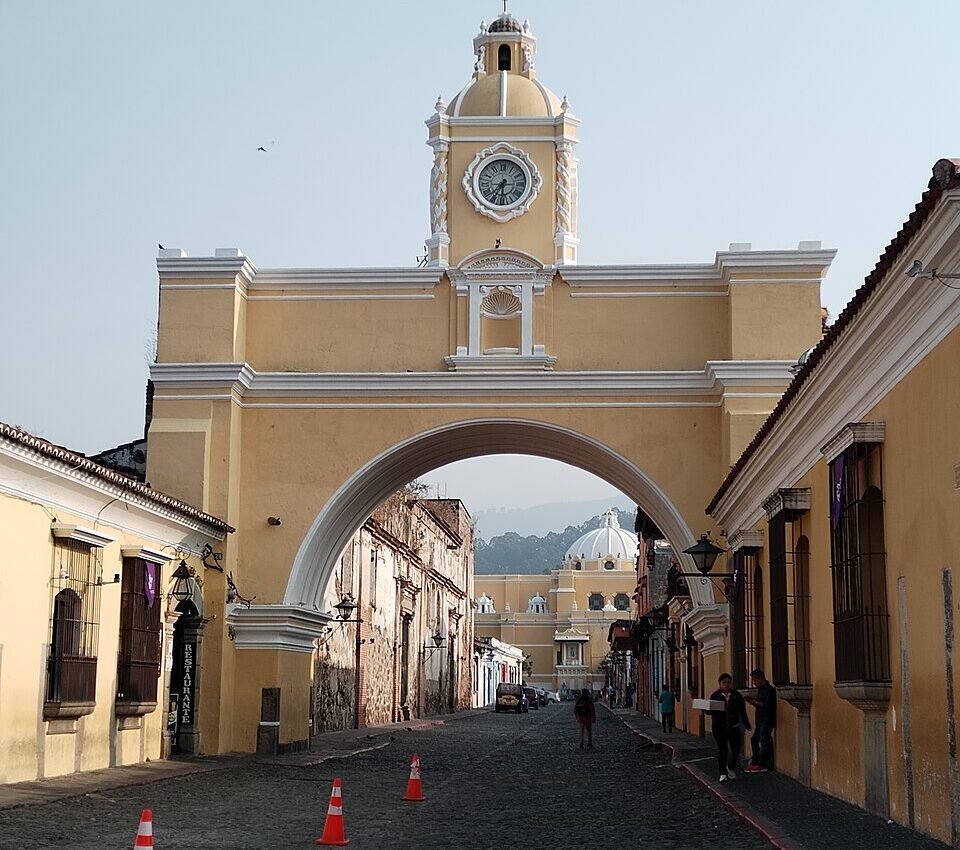
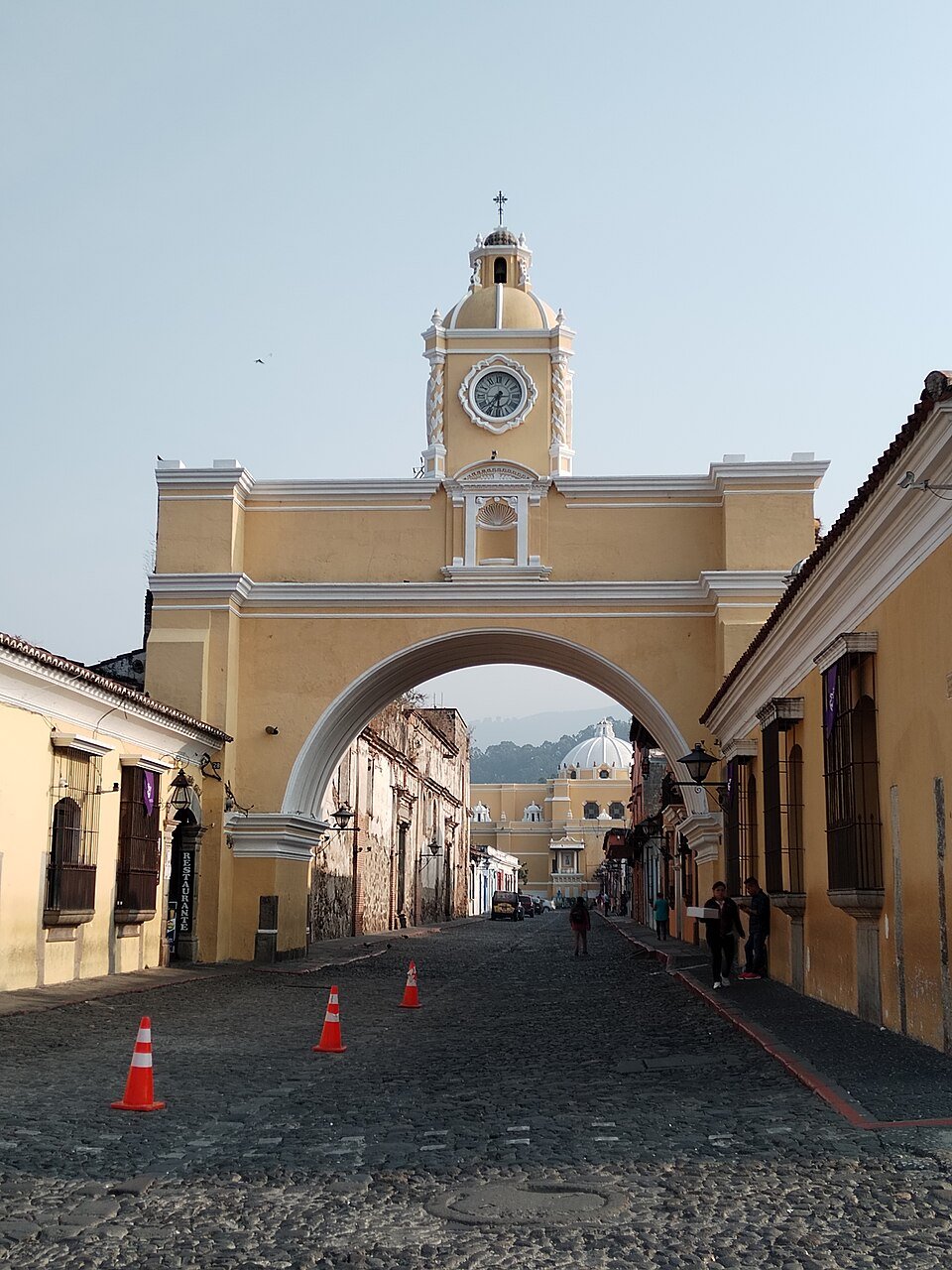
The Santa Catalina Arch is one of Antigua’s recognizable architectural landmarks. Take photographs from pedestrian-safe areas and remember that the street remains part of an active city. Walk through the surrounding blocks at a comfortable pace, stopping for interesting building details and official interpretive signs instead of treating every facade as open to tourists.
Afternoon: one major church or monastery site
Choose a major historic religious complex rather than scheduling several. La Merced, the Cathedral area and former monastic buildings provide different ways to learn about architecture and earthquake history. Admission, restoration closures and photography rules vary. Check the specific institution’s published hours and prices close to the visit; a generic city ticket is not proof that every monument is open.
Evening: food and gentle walking
Choose a restaurant based on verifiable opening hours, current menus, allergies and a realistic return route. Antiqua’s highland evenings can feel cooler than afternoons, so carry a light layer. Returning to accommodation before you are exhausted is a better first-night plan than scheduling a long unverified nightlife itinerary.
Day two: a viewpoint, living crafts and time for weather
If conditions are suitable, a morning viewpoint can help you appreciate the valley and surrounding volcanoes. Plan how you will get there, whether the route is accessible, and whether local authorities or a trusted guide advise against the visit that day. Do not treat a social-media photograph as evidence that a viewpoint is always open or safe. If the weather is poor, prioritize museums, cafes or a workshop instead.
A meaningful local cultural experience
Consider a workshop with a local maker or a legitimate community organization. Ask what the price includes, whether the group is being paid fairly, if you may photograph the process, and whether the activity is actually led by people with the skills or traditions being described. Cultural work should not be staged or described as timeless merely to satisfy a tourist’s expectations.

What about Acatenango and other volcano trips?
Volcano outings can be much more demanding than Antigua city sightseeing. Acatenango is a high-altitude trek that commonly requires significant exertion, proper clothing, sufficient water, a suitable guide and awareness of rapid weather changes. Fuego is an active volcano. Do not assume proximity makes an eruption viewpoint safe. Check official volcanic activity reports through Guatemala’s INSIVUMEH and follow current local emergency restrictions. Travelers with health concerns should consider altitude, fitness and access to assistance before committing.
Trip budget worksheet: compare true costs
| Item | What to confirm |
|---|---|
| Airport transfer | Vehicle price, pickup, waiting time and luggage |
| Lodging | Nightly total, taxes, cancellation and stairs |
| Historic sites | Individual tickets, current opening hours and payment |
| Food | Menu, service charge and dietary restrictions |
| Activities | Guide, equipment, transport and refund rules |
| Emergency margin | Weather delays, last-minute transport or medicine |
For an illustration, not a price quote: if two nights of lodging cost $120 total, transport $50, meals $60, activities $45 and emergency margin $25, the planned budget is $300. Replace every figure with a dated quote for your actual travelers and dates. Foreign-currency conversion and cash withdrawal charges may also apply.
When to visit and how to prepare
Weather and local festival calendars shape the experience. Dry days may make walking easier, while rain can be heavy and sudden in the highlands. Easter/Holy Week is an especially significant period for local religious processions; dates, crowds, lodging rules and road access can differ markedly from ordinary weeks. If visiting during a major event, check municipal notices and approach living religious traditions respectfully.
- Wear shoes appropriate for slippery, uneven cobblestones.
- Carry water, sun protection, a light waterproof layer and any medicines.
- Use a map that works offline and ask your lodging to mark an approved return route.
- Avoid climbing unstable historic walls or entering roped-off conservation areas.
- Check volcanic and weather advisories before joining hikes.
- Use licensed, verifiable operators and keep written booking confirmations.
How Antigua connects with the rest of Guatemala
If your trip includes the western highlands, it can make sense to continue to Lake Atitlán by road, with a transfer to Panajachel and onward village arrangements. See our Lake Atitlán village and boat guide to avoid a late missed connection. For northern Petén, including Maya sites near Flores, set aside separate travel days; the Tikal guide has its own logistics.
Frequently asked questions
Can I explore Antigua without a car?
Yes, much of the historic center is walkable for travelers comfortable with uneven paving and slopes. Transport is useful for accommodation farther out, airport transfers and regional excursions.
Is two days enough?
Two days are sufficient for a relaxed first orientation and selected sights, not every museum, artisan experience and volcano outing. Add more time if you want a demanding guided hike or regional visit.
Are all old churches open for tourists?
No. Some are active worship spaces, some require tickets and some may close for conservation or services. Check the exact venue.
What if volcano conditions worsen?
Follow official emergency and local guide instructions, change your itinerary and avoid self-directed volcanic approaches. A scenic viewpoint is never more important than safety.
Research sources and transparency
Background: UNESCO Antigua Guatemala, INSIVUMEH official hazard information and Guatemala tourism information. Image credits are shown next to each photograph; the planning diagram is original. This independent article does not claim that our writers personally stayed in hotels, inspected services or witnessed volcanic conditions on the publication date. Confirm time-sensitive rules before travel.
Information is provided for general guidance. Verify current rules, availability and individual terms with the official organizations linked in this guide.