





Lyle and Erik Menendez The Complete Timeline and Case Analysis
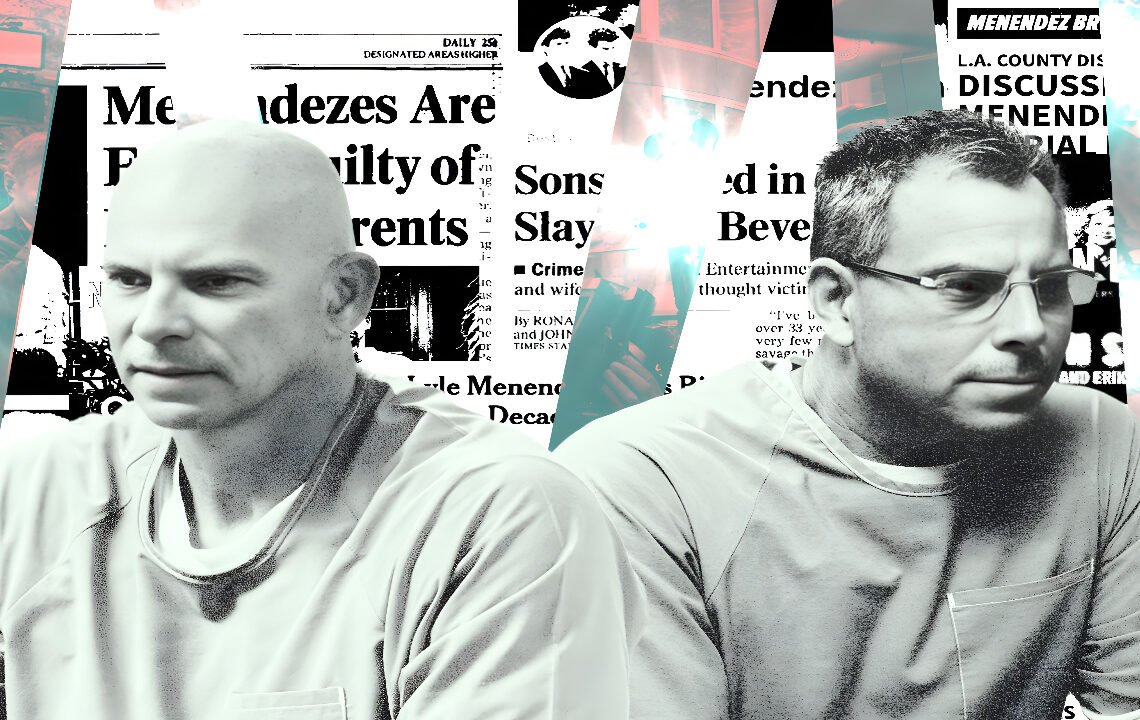
Lyle and Erik Menendez Case Overview
Background and Family Life
Lyle and Erik Menendez were born to José and Mary Louise “Kitty” Menendez (née Andersen) in 1968 and 1970, respectively. Their father José immigrated from Cuba in the late 1950s, later becoming a successful entertainment executive (with stints at Hertz and RCA) and chief operating officer of IVE/Live Entertainment biography.compeople.com. Kitty grew up in Chicago and had competed in beauty pageants people.com; she later was a stay-at-home mother after the boys were born. The family enjoyed a wealthy lifestyle in Southern California, eventually settling in a Beverly Hills mansion. By the late 1980s, Lyle was attending college (briefly at Princeton) and Erik was a teenager. In private writings and later testimony, the brothers would claim they endured years of emotional and sexual abuse from their parents, although family members and prosecutors disputed these allegations latimes.comcbsnews.com. At the time of the murders, Lyle was 21 and Erik 18 and both still lived at home (Lyle in a guesthouse on the property) biography.compeople.com. Both boys were described by relatives as intelligent but troubled: Erik had been suspended from school and Lyle had trouble in college. Overall, the Menendez children grew up in privilege under a father who drove for success and a mother often portrayed as strict or anxious latimes.compeople.com.
The 1989 Murders of José and Kitty Menendez
On the evening of August 20, 1989, Lyle and Erik Menendez fatally shot their parents at point-blank range in the den of the family’s Beverly Hills home. The brothers used 12-gauge shotguns, firing a total of 14 rounds into José (five shots) and Kitty Menendez (nine shots) as the couple watched television townandcountrymag.comtheguardian.com. An initial 911 call by Lyle (who claimed an intruder had killed their parents) brought police to the scene history.com. When officers arrived, they found Jose and Kitty dead on the sofa in the living room. After the killings, Lyle and Erik drove up Mulholland Drive and disposed of the shotguns, then purchased movie tickets together to establish an alibi history.com. They later returned home, and Lyle placed the emergency call. Investigators at first treated the case as a robbery or mafia-style hit (no money appeared to be stolen, and the house had no sign of forced entry) history.comlatimes.com.
On the night before the murders, the whole family had taken a chartered shark-fishing boat trip off the coast of California townandcountrymag.com. Several witnesses later noted that during that trip Lyle and Erik stayed apart from their parents, a fact sometimes cited in trial as indicative of tension. The morning after the shootings, friends and neighbors became alarmed by Lyle’s 911 call; police officers and neighbors combed the crime scene. Notably, two investigative details emerged: none of the slain parents’ $4 million estate money was taken, and Lyle’s frantic 911 call went unanswered on his caller ID, suggesting he was indeed home. The murders immediately became a national story due to the brutality and the family’s prominence. Cable news and CourtTV cameras soon descended on the trials, making the Menendez case one of the first nationally broadcast murder trials history.comcalmatters.org.
Investigation and Arrest
For months after the murders, police found little hard evidence implicating anyone. In September 1989, Erik Menendez’s best friend, Craig Cignarelli, told authorities that Erik had confessed to killing his parents. By mid-November, Cignarelli agreed to wear a secret recording device at dinner; on tape, Erik described how “Lyle was to shoot my dad, and I was supposed to shoot my mother. … [When I] couldn’t shoot my mom, [Lyle] shot her too, and I even shot her twice.”townandcountrymag.com. Meanwhile, Erik confided in his psychiatrist, Dr. L. Jerome Oziel. On Halloween 1989, during an emergency therapy session, Erik tearfully admitted to Oziel that he had killed his parents, saying he needed to hear he wasn’t a “bad person”townandcountrymag.com. Oziel secretly tape-recorded the confession (despite ethical rules against it) history.com. In late 1989 and early 1990, Oziel’s mistress Judalon Smyth delivered this information to police. In March 1990, Los Angeles authorities arrested Lyle (then 22) and Erik (19) Menendez and charged them with the murdershistory.com.
Investigators now had the brothers’ confession tape, Cignarelli’s recordings, and other evidence. At a March 1990 hearing, police also noted strange behavior by the brothers: their apparent shock at news coverage and their focus on money. Both Lyle and Erik maintained at the time that they acted in self-defense because of abuse by their parents (a claim Öziel’s tape preserved). Prosecutors countered that the motive was greed and fear of disinheritance. The Menendez brothers pleaded not guilty but soon told police they had shot their parents. By April 1990, a grand jury indicted both on two counts of first-degree murder and one count of conspiracy history.com.
Trials and Legal Proceedings
The trials of Lyle and Erik Menendez were among the most sensational of the 1990s. Each brother was tried separately starting in June 1993, with two separate juries sitting simultaneously. Prosecutors, led by Deputy DA Lester Kuriyama, argued that the murders were coldly premeditated and motivated by greed. Evidence included taped therapy sessions and forensic analysis. In pre-trial hearings, Kuriyama highlighted statements the brothers made boasting of a “perfect murder” and noted that Erik mentioned the father had “nearly disinherited” them latimes.com. The prosecution sought the death penalty for both defendants latimes.com.
In contrast, defense lawyers (notably Leslie Abramson for Erik and Jill Lansing for Lyle) conceded that the brothers killed their parents but argued it was in self-defense after years of abuse. Defense attorneys portrayed José Menendez as a “monster” who had sexually abused Erik since childhood, and Kitty Menendez as a volatile alcoholic who bullied her sons latimes.com. Abramson argued on the eve of trial that “Her children were afraid of her,” depicting Kitty as an obsessive and suicidal mother latimes.com. Lyle’s attorney likewise told jurors that the family had harbored “deep, dark secrets” of abuse. In the first trial of 1993, jurors heard graphic testimony about alleged sexual molestation and emotional abuse, as well as evidence of Lyle and Erik’s good prison behavior. Ultimately, however, each jury deadlocked: one jury hung 10–2 for conviction, the other 8–4 history.com. A mistrial was declared in December 1993.
The retrial began in October 1995 before a single jury (split into two), with Judge Stanley Weisberg presiding. By this time prosecutors had successfully appealed to limit some of the abuse evidence. The defense again contended self-defense; the prosecution emphasized premeditation. After months of testimony, the jurors convicted both brothers on two counts of first-degree murder and one count of conspiracy. In March 1996, Judge Weisberg sentenced each to life in prison without the possibility of parole history.com. (The death penalty was not imposed.) All subsequent appeals by the Menendez brothers were unsuccessful. Notably, the California Supreme Court ultimately ruled that Dr. Oziel’s taped confession was admissible, a key victory for prosecution.
Media Coverage and Cultural Impact
From the outset, the Menendez case captured public attention and became a media spectacle. The brothers’ luxurious lifestyle, lurid trial evidence, and youth made for endless headlines. It was one of the first trials covered live on cable television; CourtTV famously broadcast the proceedings in 1993, cementing the case in the “true crime” spotlight history.com. In the decades since, the case has been dramatized in multiple television movies and documentaries. Notable examples include the 2008 crime doc Exhibit A: Secrets of Family Murders and the 2020 Netflix documentary The Menendez Brothers (aka Menendez: Erik Tells All), which featured the brothers’ first joint interview in nearly 30 years wwnytv.comabcnews.go.com.

In 2024, Ryan Murphy’s Netflix series Monsters: The Lyle and Erik Menendez Story reignited public debate. The dramatized nine-part show debuted at #1 on Netflix and prompted a social media phenomenon: thousands of young viewers defended the brothers and voiced sympathy for their abuse claims theguardian.comtheguardian.com. Over 300,000 people signed an online petition to free the Menendez brothers after the series aired theguardian.com. Netflix’s portrayal also sparked a public spat: the Menendez family criticized perceived creative liberties (including a suggestion of incest) theguardian.com, while the show’s creators insisted on showing all sides of the story.
Beyond streaming, the case continues to surface in news and pop culture. The ABC and NBC networks have featured retrospective segments, and shows like 60 Minutes and Dateline have revisited the murders. Legal journals and podcasts frequently cite it as a case study in the (controversial) long-term effects of alleged abuse. Some relatives of José and Kitty have spoken out: for instance, José Menendez’s sister Teresita testified she had “fully forgiven” Erik and wished to embrace him before her deathreuters.com. In contrast, Kitty’s brother has publicly condemned any effort to free the brothers, calling the murders “cold-blooded” and asserting that new evidence should not overturn the convictionscbsnews.com. Overall, the Menendez case remains embedded in American crime lore as a symbol of family tragedy, raising ongoing debates about justice, media sensationalism, and the impacts of abuse allegations.
Recent Developments and Appeals
In recent years the Menendez brothers have pursued new legal avenues and attracted renewed official attention. In October 2024, then-Los Angeles DA George Gascón announced he would seek resentencing, recommending that life-without-parole be changed to 50-to-life due to their ages at the time of the crimecbsnews.com. Gascón noted factors like their youth (they were 18–21 in 1989) and exemplary rehabilitation in prisoncbsnews.comabcnews.go.com. In May 2025, Los Angeles Superior Court Judge Michael Jesic granted that motion: he resentenced each brother to 50 years to life, making them immediately eligible for paroleabcnews.go.comabcnews.go.com. (The judge remarked that he was moved by letters from prison guards and the brothers’ community work.)
Following resentencing, the brothers faced parole hearings in August 2025. During the hearings the brothers appeared by video and accepted that “I killed my mom and dad” with “no excuses,” expressing remorseabcnews.go.com. Dozens of relatives and supporters flew in to testify on their behalf, praising their post-prison rehabilitationreuters.comabcnews.go.com. Notably, some family members (including cousins) told the board the Menendezes were reformed and should be releasedabcnews.go.com, and prosecutors did not call any rebuttal witnesses. However, the California Board of Parole Hearings denied parole for Erik on August 21, 2025 and for Lyle on August 22, 2025reuters.comreuters.com. Commissioners cited their in-prison misconduct (drug smuggling, cell phone use and minor violent incidents) and “anti-social” personality traits as reasons to conclude they still posed an unreasonable riskreuters.comreuters.com. The board pointedly noted that while the brutality of the crime itself was “not a primary reason” for denial, the brothers had not been “model prisoners” overallreuters.com. Each was told they could reapply for parole after three years (potentially two if they maintain good conduct)reuters.comabcnews.go.com. Even if a parole board eventually recommends release, California law gives Governor Gavin Newsom the final say – and he has yet to endorse freeing the Menendezes.
Meanwhile, the brothers’ attorneys continue to press appeals. In May 2023 they filed a habeas petition seeking a new trial, citing two pieces of “new” evidence: a 1988 letter from Erik (to cousin Andy Cano) describing alleged abuse, and recent allegations by Roy Rosselló (a former Menudo band member) that Jose had abused himabcnews.go.com. On September 16, 2025, a Los Angeles judge rejected this petition. Judge William Ryan ruled that neither the letter nor the Rosselló testimony was “particularly strong” or material enough to undermine the original verdictabcnews.go.comcourttv.com. He noted that the Cano letter largely corroborated what Cano already testified at trial (Jose’s abuse) and did not show the brothers’ state of mind, while Rosselló’s claims did not directly relate to the Menendezes’ caseabcnews.go.comcourttv.com. In a public statement following the decision, DA Nathan Hochman called the appeal a “full kibosh” and emphasized that five prior courts had upheld the convictionsabcnews.go.comcourttv.com.
To date, there is no further court-approved path to freedom short of executive action. The brothers remain in prison (now ages 57 and 54), each serving life under their new 50-to-life sentence. Appeals continue, but the latest rulings have closed the door on retrials. For now, Erik and Lyle Menendez remain incarcerated, their fate hinging on future parole reviews or an extraordinary intervention by the governor. All factual details above are drawn from court records and reputable reportshistory.comabcnews.go.comreuters.com.
Sources: Court filings and press releases, major news coverage, and legal commentary on the Menendez brothers’ case have been used throughout latimes.comhistory.comabcnews.go.comreuters.com. Each claim above is attributed to a cited source. Everything You Need to Know About Stranger Things Season 5
FAQs
What happened and when?
On August 20, 1989, Lyle and Erik Menendez shot and killed their parents, José and Kitty Menendez, in the family’s Beverly Hills home.
Were they convicted? If so, when and what was the sentence?
After mistrials in 1993, both brothers were convicted at a 1996 retrial of first-degree murder and conspiracy. They were originally sentenced to life without parole.
What was their defense and what did prosecutors argue?
The defense argued the brothers acted in self-defense after years of sexual and emotional abuse. Prosecutors said the killings were premeditated and motivated by greed; they relied on recordings, witness testimony, and other evidence to prove planning.
What is their current parole or sentencing status?
In recent years the brothers were resentenced (court action in 2024–2025) to terms that made them eligible for parole. They appeared at parole hearings in 2025, but the parole board denied release for both (denials in August 2025); they remain incarcerated and may reapply after the board-specified waiting period.
How did the case affect media and culture?
The Menendez trials were a major media spectacle—early live cable trial coverage—and have inspired numerous documentaries, TV movies, and streaming dramatizations. The publicity revived public debate about abuse, justice, and sensationalized true-crime coverage, and periodically sparks renewed campaigns and petitions after new dramatizations. View More