



Colonial Home Loans: Manufactured Home Financing, Costs and Eligibility
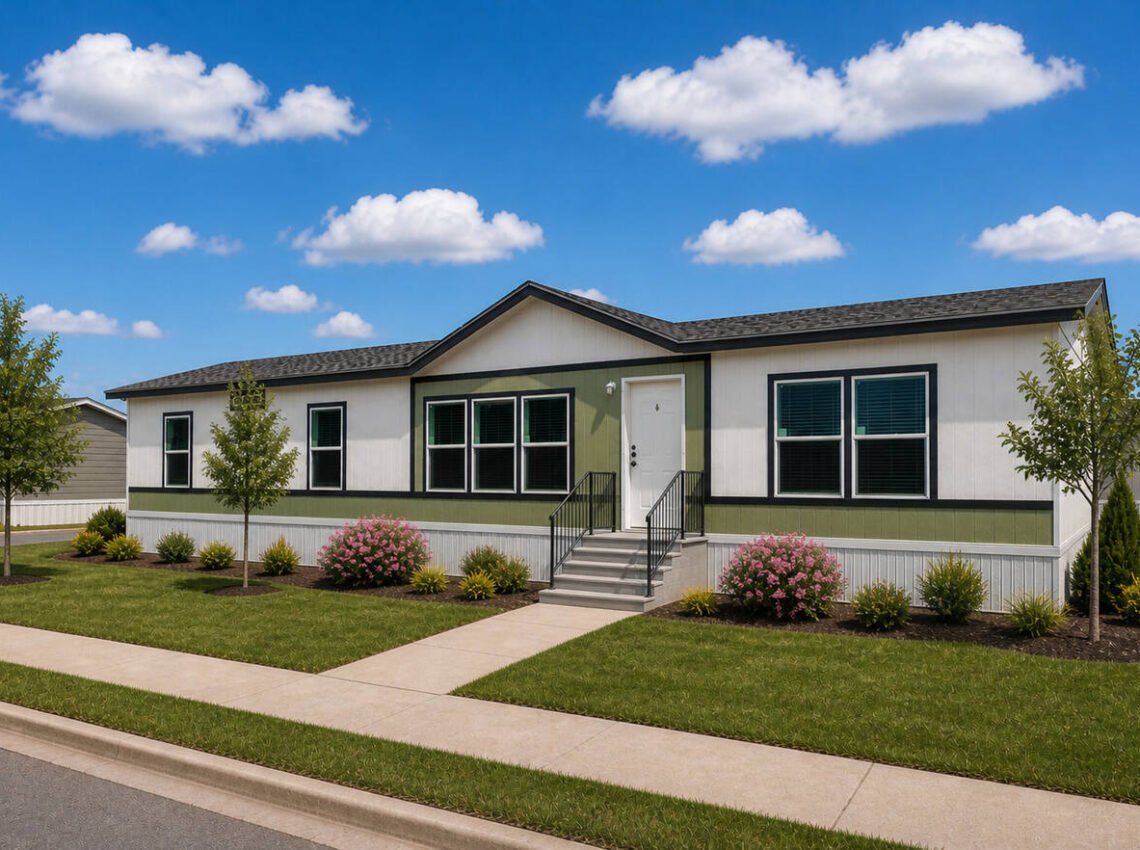
Colonial Home Loans in Oregon focuses on lending for manufactured and mobile homes—a specialized area that differs from standard mortgages on site-built houses. Its official website describes financing for single-, double- and triple-wide homes, park-community homes and certain land-and-home purchases. Before you apply, the most important question is how the property and land are owned, because the type of title, loan contract, park lease, insurance and consumer protections can change the true cost of living there. This independent, detailed guide explains those differences and what to verify with the lender.
This article covers Colonial Home Loans LLC, 15850 S. Pope Lane, Oregon City, OR 97045, not every business with a similar name. The company says its manufactured-home lending services are for Oregon. No loan, customer service interaction or property inspection was personally tested by Cen Xianyuan. Any amounts below are hypothetical educational examples, not interest rates advertised or offered by the company.
Quick facts: which lender is this?
| Item | Published company information | What readers should verify |
|---|---|---|
| Company | Colonial Home Loans LLC / Colonial Home Loan | Confirm the legal entity on documents |
| Area served | Oregon, according to its website | Ask whether your exact property location is eligible |
| Specialty | Manufactured and mobile home financing | Ask if it finances your model, age and title type |
| Home options | Single-, double- and triple-wide; park/community and land/home scenarios | Get terms for your actual property |
| Office listed | 15850 S. Pope Lane, Oregon City, OR 97045 | Compare with independently verified lender contact records |
| Registration reference | The website lists NMLS 2219927 and ML-4670 | Look up current licensing status rather than relying solely on marketing text |
| Prequalification | The website markets a no-cost preliminary review | Check whether this produces a credit inquiry or any obligation |
These points come from the company’s homepage, About Us and contact page. A company website is the primary source for describing its own advertised products, but independent license verification remains important.
What exactly is a manufactured home?
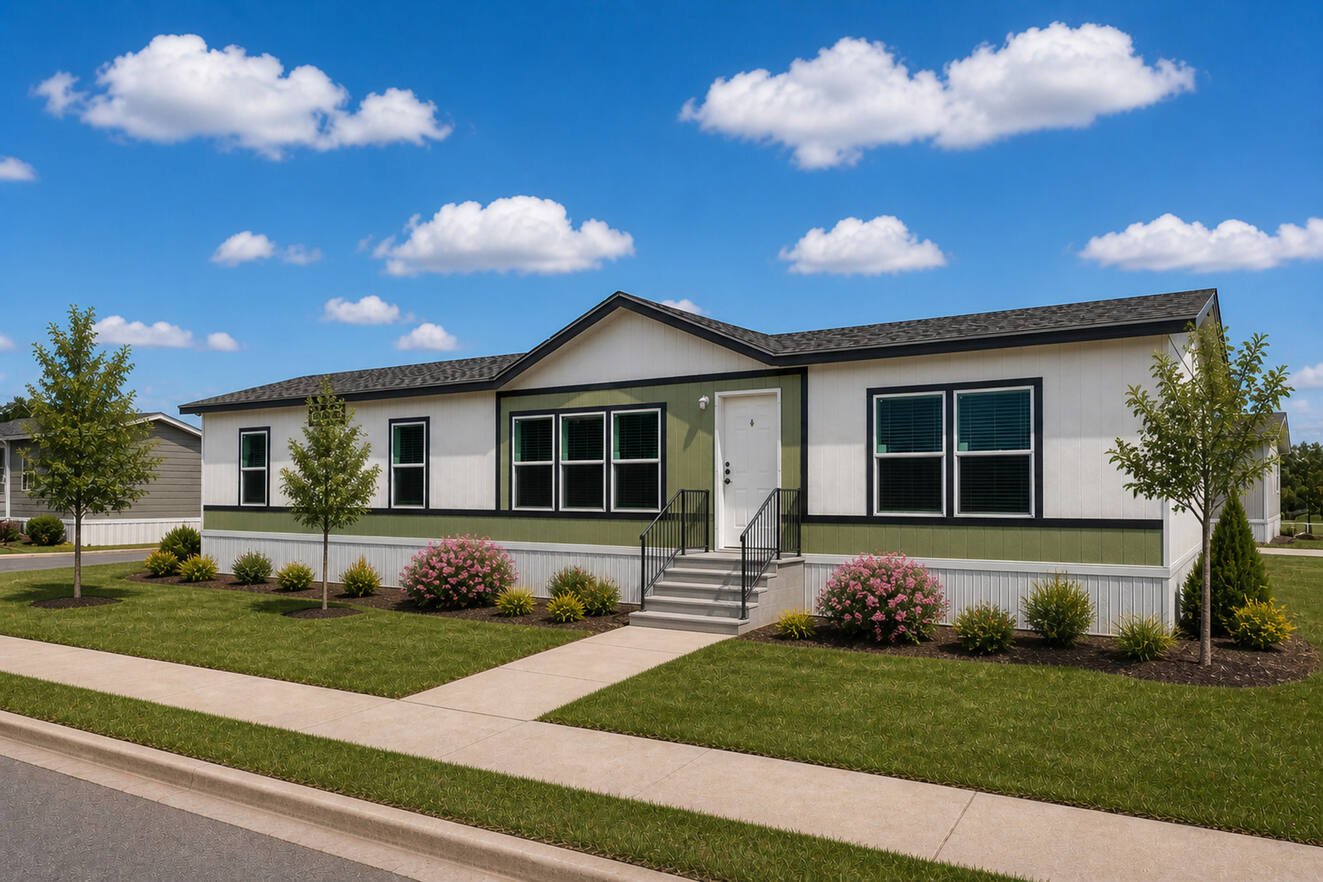
A manufactured home is housing produced in a factory to applicable construction standards and then installed on a site. It may be a single-wide, double-wide or other multi-section structure. Some older mobile homes predate the federal manufactured-housing construction standards, and eligibility can depend on age and compliance. The same home may be financed differently depending on whether you also own the underlying land and how state law treats the title.
The U.S. Department of Housing and Urban Development’s manufactured-home finance information distinguishes financing for a home unit, for a lot, and for a home-plus-lot. This does not mean Colonial automatically offers an FHA-insured Title I loan; you must ask the lender to identify the actual program and its underwriting rules.
Home-only, park-community and land-and-home loans compared
| Scenario | Typical property situation | Questions to ask |
|---|---|---|
| Home-only purchase | You own the home but do not necessarily own the land | Is the home personal property or real estate? What is the loan lien? What is the park rent? |
| Manufactured home in a community | Home occupies a rented or leased park space | What happens if lot rent rises, rules change or the park closes? |
| Land-and-home purchase | You buy both home and land | Can title be treated as real property? Is a permanent foundation required? |
| Older or pre-HUD home | Home’s construction and documentation may differ from newer models | Does lender accept age, condition and construction documentation? |
| Second home/investment | Property will not be your primary home | Do LVR, rate, down payment and insurance rules differ? |
What is a chattel loan, and why does it matter?
A chattel loan generally finances a manufactured home as personal property rather than mortgage-secured real estate. The Consumer Financial Protection Bureau’s manufactured-housing research found that chattel borrowers historically faced higher rates and other disadvantages compared with some mortgage borrowers, especially where they did not own the land. That research describes industry patterns, not rates from Colonial Home Loans.
- Title and security: ask whether your agreement treats the home as personal property, land-based real estate, or another legally recognized arrangement.
- Consumer disclosures: understand which contract protections and closing requirements apply to your loan.
- Resale: a buyer’s available financing options may depend on the home’s age, location, title and park approval.
- Land risk: being current on a home-only loan does not guarantee you can remain on the same leased site forever.
- Refinancing: eligibility and pricing may be different from refinancing a conventional site-built home mortgage.
Does Colonial Home Loans offer fixed and variable rates?
The lender’s website says it markets fixed-rate loan products and discusses variable-rate options on inquiry. It also advertises that many fixed loan products have no prepayment penalty. These are marketing statements, not universal contract terms. Ask for the exact interest rate, APR, repayment term, amortization schedule, early-payoff rules and every fee in writing for the program you actually qualify for. Do not assume a loan has no prepayment penalty because a generic company page says “most.”
An honest way to compare loan cost
For the next example, imagine two hypothetical loan offers for the same manufactured home, both with A$? No—because this property is in Oregon, all figures here are U.S. dollars. These are purely mathematical illustrations and are not Colonial rates.
| Illustrative rate | $90,000 over 15 years: monthly principal & interest | Approx. 15-year interest |
|---|---|---|
| 8% | $860 | $64,816 |
| 10% | $967 | $84,086 |
| 12% | $1,080 | $104,427 |
At 8%, the estimated monthly principal-and-interest payment is $860, while 12% yields about $1,080. The difference is roughly $220 per month. These hypothetical payments exclude insurance, taxes, community rent, utilities, fees and property upkeep. Never use this table as a lender quote.
Home-only borrowers: add the park’s full costs
A home-only loan payment can appear low compared with owning a site-built house, but the homeowner may also owe recurring lot rent and community fees. For example, a fictional household pays $700 a month on its loan, $650 in lot rent, $95 insurance and sets aside $150 for maintenance and related costs. That totals $1,595 monthly before utilities and other expenses. Changes in lot rent may significantly affect affordability over time.
- Request the current lot lease and the process for annual rent increases.
- Find out how rules on pets, visitors, subletting, renovations and home resale work.
- Check whether the lease can be terminated or transferred and how much notice is required.
- Review fees for water, sewer, waste collection, parking and common facilities.
- Ask the property manager how home removal or relocation is handled if you later need to move.
Land-and-home financing: different legal questions
If you are buying the lot and home together, obtain the land title record, current surveys where appropriate, installation certification, building/permit documentation, insurance requirements and information about liens. Ask your lender and a qualified local professional whether the home can be titled as real property and whether local zoning permits the intended use. Do not rely on a real-estate listing that simply calls a home ‘permanent.’
What to know about manufactured-home age and foundations
Colonial says it considers older and some pre-HUD units, and that certain products may not require a conventional concrete foundation or runners. Eligibility for an actual deal can still depend on conditions, state rules, inspections, land arrangements and available lending programs. Some government-backed programs require specific installation standards. The correct requirement depends on the program, and a general marketing statement is not a waiver of applicable building rules.
Application steps: from property details to closing
- Identify the exact home. Record manufacturer, year, width/sections, serial number or applicable HUD labels, site and title information.
- Confirm the loan category. Tell the lender whether you own the land, lease a park lot or are buying both home and land.
- Check initial eligibility. Ask about property age, geography, income documentation, down payment and credit considerations.
- Verify identity and licensing. Independently check the lender and originator through NMLS Consumer Access and Oregon regulatory records.
- Submit documents securely. Use verified lender channels to provide income, debt, identification and property information.
- Request a written loan estimate or other required disclosure. Confirm APR, finance charges, periodic repayments, default penalties and any balloon amount.
- Review home and community documents. For park land, check lease transfer and rules. For owned land, verify title, survey or installation requirements.
- Complete inspections and legal review. Obtain qualified property, title and legal assistance as appropriate.
- Review the final contract. Resolve any change in amount, interest, closing charges or disbursement before signing.
- Keep copies. Retain the disclosure, full loan agreement, home title documents, insurance, community lease and payment schedule.
What documents are commonly relevant?
| Category | Examples | Reason |
|---|---|---|
| Identity | Accepted legal ID, current contact details | Verify the borrower and prevent fraud |
| Income | Recent pay documentation, tax returns or other lawful records | Demonstrate ability to repay |
| Existing debts | Loan balances, credit obligations and housing costs | Assess household commitments |
| Down payment | Documented funds or permitted gift source | Verify equity and source of funds |
| Home identification | Year, make, model, serial or HUD information, title | Confirm the collateral and loan program |
| Site status | Park lot lease or deed/land title | Determine legal and occupancy requirements |
| Insurance and appraisal | Relevant policies, inspections and lender valuation | Assess risks and property condition |
Important questions about the lender’s advertised timeline
Colonial’s site advertises timely responses, sometimes saying a decision can be made within 48 hours. A response or preliminary underwriting indication does not guarantee the property will pass checks, that closing can happen immediately or that every borrower will qualify. Request realistic estimates for your individual circumstances, especially if home-title correction, park approval or installation work may be needed.
Red flags in a manufactured-home lending offer
- A promise of guaranteed approval before the lender knows your finances or property.
- A supposed agent asks for passwords, one-time verification codes or remote banking access.
- Upfront payments are demanded through gift cards, cryptocurrency or personal money-transfer accounts.
- The legal lending entity on the contract does not match the company you investigated.
- Nobody can explain whether the home is secured as personal or real property.
- Lot lease terms and community costs are withheld until after a nonrefundable deposit.
- The written APR, finance charge or payment schedule differs materially from what was promised verbally.
- You are pressured to sign documents you have not been allowed to read.
Five questions for comparing Colonial with another lender
- Which loan type are you offering on this exact manufactured home, and why?
- What is the current APR, total interest, monthly payment and cash required at closing?
- Are there origination, appraisal, late, default or prepayment charges?
- Does your estimate include land/lot rent, taxes, insurance and other recurring housing costs?
- Can I sell or refinance the home later under these title and park conditions?
Frequently asked questions
Does Colonial Home Loans operate nationwide?
The company says its current niche manufactured-home services are for Oregon. Check whether your actual property qualifies before applying.
Does it finance single-, double- and triple-wide homes?
These categories are listed on its official website. The site’s description is not a promise that every home age, condition or title will be approved.
Can I finance a home in a leased-land park?
The lender advertises programs involving homes in parks and communities. Approval can also depend on the lease, park rules, home title and underwriting.
Does a manufactured home loan require a down payment?
Requirements vary by home, loan type and lender. Do not assume a zero down payment is available to you; request written terms and verify the total upfront costs.
Is an older or pre-HUD home always ineligible?
Not always. The company describes interest in certain older homes, but actual construction, title and installation standards differ by program.
Are Colonial manufactured-home loans FHA loans?
The official marketing pages do not establish that every product is FHA insured. Ask the lender to identify the specific loan program; HUD’s separate Title I program is not proof that this company offers it.
Does fixed-rate mean the monthly housing cost cannot rise?
No. The loan’s principal-and-interest installment may be predictable, but insurance, taxes, community lot rent and maintenance can still change.
Is there always no prepayment penalty?
No. The lender advertises that many programs do not have one. The actual loan agreement determines whether your product contains a charge or restriction.
How do I confirm the lender is licensed?
Verify the legal entity and current relevant registration directly through independent NMLS Consumer Access or Oregon licensing records, rather than relying only on a copied website badge.
Does prequalification guarantee approval?
No. Prequalification is preliminary and can be changed by underwriting, identity, collateral or document verification.
Can I refinance a chattel loan later?
Possibly, depending on lender availability, property title, home condition, credit and market conditions. Some manufactured-home loan types can be harder to refinance.
Does a lower interest rate always make an offer better?
No. Compare APR, origination fees, term, total finance charge, park expenses, late fees and important consumer protections.
Official sources and independence
Company information: Colonial Home Loans official website, company profile, application details and office contact. Independent background: CFPB manufactured-housing finance research and HUD manufactured-home finance options. For broad mortgage budgeting concepts, read our home loan cost guide.
This is a third-party educational guide. Cen Xianyuan has not applied for a loan, verified a customer testimony, inspected any Colonial-financed property, or determined whether a particular loan contract complies with all applicable rules. Lender materials are identified as company claims and should be confirmed in writing. Financial information is not personalized legal or mortgage advice.




1 Comment
[…] CFPB Loan Estimate explainer and CFPB lender-comparison guide explain U.S. borrower disclosures. Local requirements elsewhere vary. This guide provides general information, not individualized financial advice. For a specific example of checking a lender’s products and legal identity, see our Colonial Home Loans guide. […]